Here is the answer up front: for building muscle, free weights and machines work about equally well — so “which builds more muscle” is the wrong question. Study after study lands in the same place: when you train hard and add weight over time, both grow muscle. The real question for a beginner is which tool helps you train harder, more safely, and more consistently right now. And the honest answer is that you want both. Let’s break down what each one actually does best, and how to split your time.
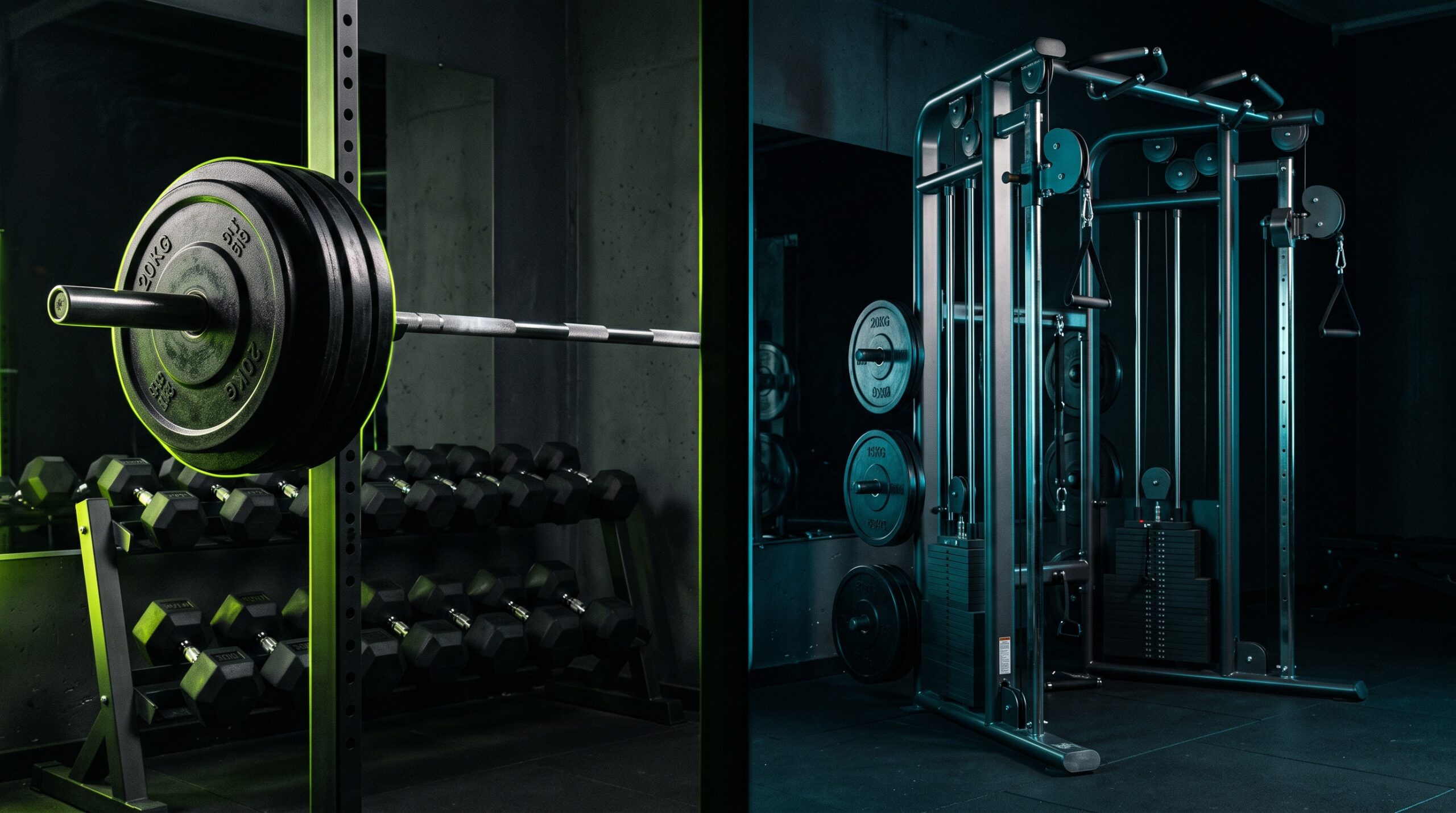
Why the muscle doesn’t care
Muscle grows in response to tension and effort, not to the shape of the equipment providing it. Push a muscle close to failure against a challenging load, do that repeatedly, and add resistance as you get stronger — that is the whole recipe, and a barbell, a dumbbell, and a machine can all deliver it. The moment you accept that, the tribal argument mostly evaporates. Neither camp is lying to you; they are just describing different tools that reach the same destination.
What actually drives growth is progressive overload — steadily doing more over weeks and months — paired with real effort on each set. If you want to know how hard “hard enough” really is, that is worth understanding on its own; our guide to training close to failure and what RIR really means covers exactly how many reps to leave in the tank. Get effort and progression right, and both free weights and machines will pay you back.
What free weights do best
Free weights — barbells, dumbbells, kettlebells — move in whatever path your body chooses. Nothing guides them but you. That comes with real advantages:
- They train your stabilizers. Balancing the weight forces smaller support muscles and your core to work alongside the big movers. You build strength that carries over to real life — picking things up, carrying, bracing.
- They allow a natural range of motion. Your joints move the way they want to, not the way a steel track dictates, which many lifters find more comfortable long-term.
- They scale forever and cost little. A barbell and some plates can build a physique for a lifetime, and the big compound lifts — squats, presses, rows, deadlifts — hit huge amounts of muscle at once.
The tradeoff: free weights have a learning curve. Balancing the load is a skill, form matters more, and some lifts really want a spotter or safety pins when you push heavy. For a total beginner, that means the first few weeks are partly about coordination, not just muscle.
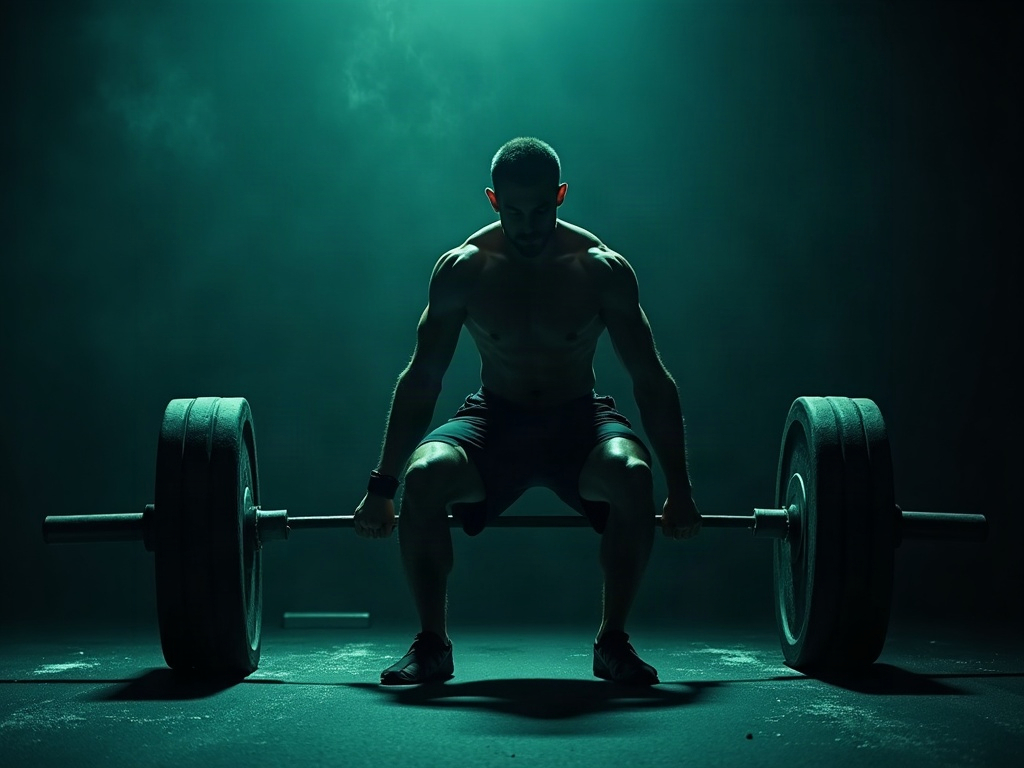
What machines do best
Machines put the weight on a fixed path so you don’t have to balance it. That single fact gives them their own set of strengths:
- They’re easier to learn. Sit down, adjust the seat, push. There’s far less that can go wrong, which makes them a confidence-building entry point when a barbell feels intimidating.
- They let you safely push to failure. Because you’re not fighting for balance, you can take a set genuinely close to your limit without a spotter — great for chasing that last hard rep.
- They isolate. Want to hammer one muscle — hamstrings, lats, biceps — without the whole body joining in? Machines make that clean and simple.
The tradeoff: the fixed path does the stabilizing for you, so you build less of that support strength, and any given machine only trains what it’s built to train. You also can’t take a machine home in a gym bag. But for pure, focused muscle-building effort, they are outstanding — and beginner-friendly in a way a heavy barbell isn’t on day one.
The verdict: use both, on purpose
Stop shopping for a winner. The strongest, best-built lifters you see use free weights and machines, because each covers the other’s weakness. For a beginner, here’s a simple way to divide your effort:
- Build your session around a few big free-weight compounds. A squat pattern, a press, a row or pull. These teach coordination, train the most muscle per exercise, and build the real-world strength machines can’t.
- Fill in with machines to add volume and hit specifics. After the main lifts, use machines to safely push individual muscles close to failure — leg curls, cable rows, a chest or shoulder press machine — when your balance and focus are already fading.
- Use machines to learn a movement, then graduate. A chest press machine is a great way to feel the pattern before you try dumbbells. There’s no shame in starting on the machine.
One thing carries across both tools: paying attention. Whether you’re balancing a dumbbell or grinding a rep on a cable stack, actually feeling the target muscle work makes the set count — that’s the whole idea behind the mind-muscle connection. And if the barbell ever feels like it’s slipping before your target muscle is done, that’s a signal to train the thing quietly capping a lot of free-weight lifts: your grip strength.
The bottom line
Free weights vs machines was never a real war. Free weights build coordinated, transferable strength and scale forever; machines are safer to learn, easy to push hard, and perfect for isolating a muscle. As a beginner you don’t have to choose — anchor your workout with a handful of free-weight compounds, back them up with machines, and progress the load on both.
So quit stalling in the equipment debate and go train. Pick a big lift, pick a couple of machines, add a little weight or a rep each week, and keep your head in the set instead of on your phone between them. The muscle doesn’t care which tool you used — only that you showed up and pushed. Keep your rest honest and your plate math simple, and let the work do the talking.