Everything else is growing. Your quads fill out your jeans, your arms are catching up, your back is wider than it was a year ago. And then there are your calves – two stubborn little mules that look exactly the same as the day you started.
Before you blame your parents, hold on. Genetics are real and calves are genuinely harder to grow than most muscles. But “bad calf genetics” is the excuse lifters reach for when the truth is simpler: they’re training calves badly. Here’s what’s actually going wrong – and how to fix it.
First, know what you’re training
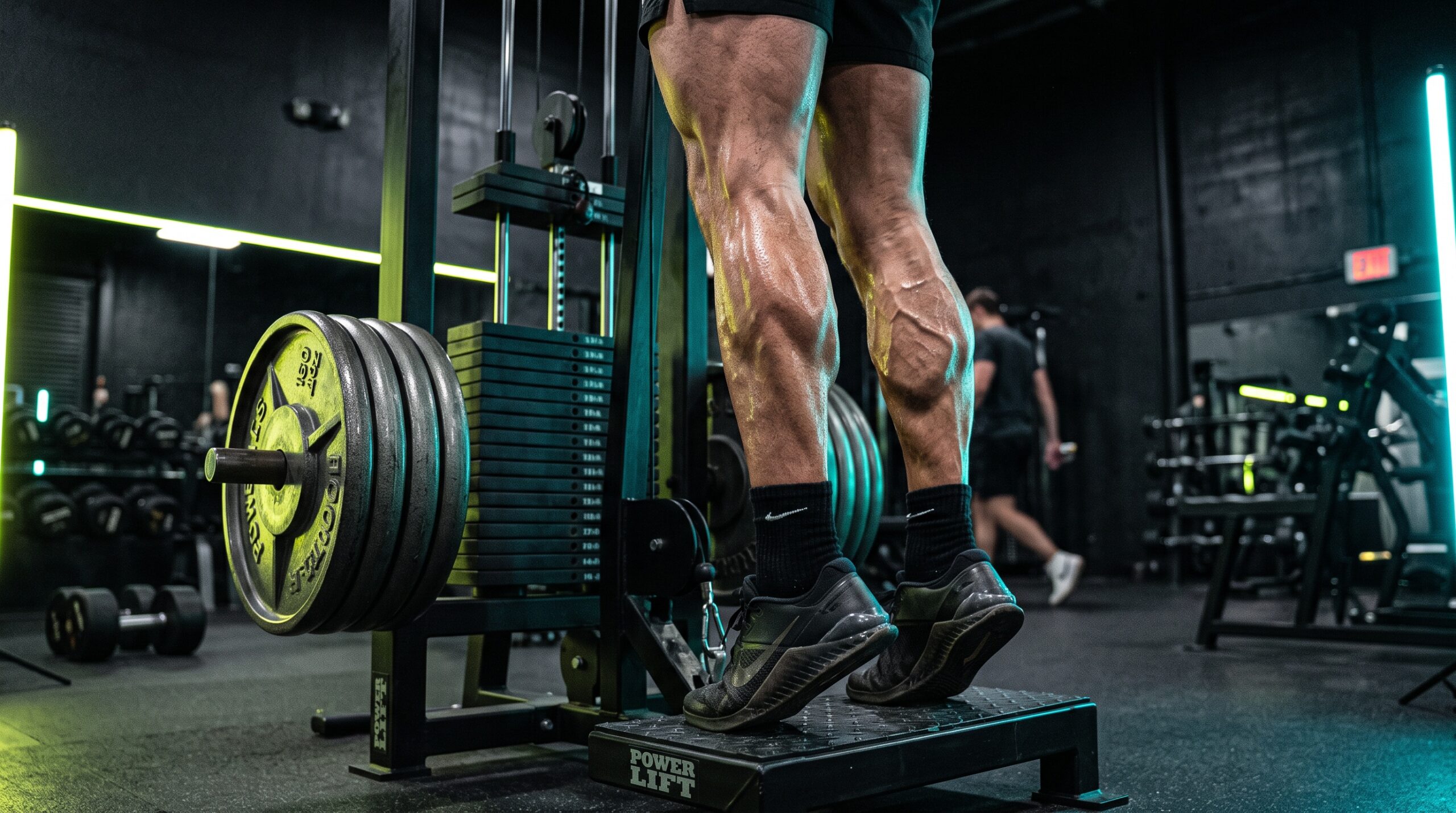
Your calf isn’t one muscle. It’s two that matter. The gastrocnemius is the big diamond-shaped muscle you see – it crosses the knee joint, so it does its best work when your leg is straight. Underneath it sits the soleus, a flatter muscle that doesn’t cross the knee and takes over when the knee is bent.
That one anatomical fact is the whole game. Train with a straight knee and you hit the gastroc. Bend the knee and you shift the load to the soleus. Most lifters only ever do standing raises, hammer the gastroc, and wonder why half their calf never shows up. You’re literally leaving a muscle on the table.

Mistake #1: You’re bouncing, not lifting
Walk past the calf machine in any gym and you’ll see it: someone stacking the pin near the bottom, then pogo-bouncing up and down at a speed that owes everything to the Achilles tendon and nothing to the muscle. The weight moves. The calf barely does.
Your calves are built for exactly this – bouncy, elastic, stride-after-stride work. That’s why they shrug off sloppy reps. You have to deliberately take the tendon’s free ride away. Slow down. Two seconds up is fine, but it’s the lowering and the bottom that count.
Mistake #2: You’re skipping the stretch
If there’s one fix that changes calves fastest, it’s this. The bottom of a calf raise – heels dropped below the platform, Achilles screaming a little – is where the growth signal is strongest. Training a muscle hard in its lengthened, stretched position is one of the most reliable ways to build it, and calves respond to it especially well.
So let the heel sink all the way down on every single rep. Pause for a beat at the bottom. Feel it stretch. Then drive up to a full, hard contraction on your toes and squeeze. Full range, bottom to top, no exceptions. Half-reps build half calves.

Mistake #3: You only ever do one version
Remember the two muscles. If every calf set you do is a standing raise, you’re ignoring the soleus entirely. Add a seated calf raise – knee bent, thighs pinned under a pad – and you finally train the other half of your lower leg. A thicker soleus pushes the gastroc up and out, which is what actually makes a calf look full from the side.
You don’t need a fancy machine, either. A standing raise on a step, a seated raise with a dumbbell or plate on your knee, a leg-press calf press – all of it works. The rule is just: train both a straight-knee and a bent-knee version across your week.
Mistake #4: You’re not training them enough
Here’s the part lifters hate to hear. Calves get used all day – walking, standing, climbing stairs – so they’re built for frequency and they recover fast. Hitting them for two throwaway sets at the end of leg day, once a week, when you’re already fried? That’s not a stimulus. That’s an afterthought.
Train them two to three times a week. Give them real volume – think 8 to 12 hard sets across the week, not two. And treat them like a main lift sometimes: do them first, when you’re fresh and can actually focus, instead of last when you just want to leave.

What good calf training actually looks like
Put it together and the fix is almost boring in how simple it is:
- Two angles: one standing (straight knee, gastroc), one seated (bent knee, soleus).
- Full range: deep stretch at the bottom, hard squeeze at the top, every rep.
- Controlled tempo: no bouncing – make the muscle do the work, not the tendon.
- Real frequency: 2-3 sessions a week, 8-12 total hard sets.
- Rep ranges: they tolerate a lot – anywhere from 8 to 20+ reps works, as long as you’re near failure with good form.
Pick your weight so the last couple of reps are genuinely hard while you still hold the stretch and the pause. If you can bounce out 30 easy reps, the weight isn’t the problem – the execution is.
Give it time, then judge
Calves are slow. Even done perfectly, this isn’t a four-week transformation – think months of honest, consistent work before you call it. But “slow” is not the same as “impossible,” and the lifters who swear they have hopeless genetics are almost always the ones bouncing through two half-rep sets a week.
Do it right. Train both muscles, own the stretch, kill the bounce, and show up often enough to matter. Track your sets so you actually add weight or reps over time instead of guessing – a rest timer between sets keeps you honest and off your phone, which is half the battle on any accessory work. Give it a real training block before you blame your DNA. Most “bad calf genetics” turn out to be bad calf training in disguise.