Walk into any gym and you’ll see the same script play out. Bench on Monday. Curls in the mirror. Maybe a few sets on the leg press if the legs get any love at all. Nothing wrong with those. But here’s the thing nobody tells you: the exercises that make you strong in the mirror aren’t always the ones that make you strong in real life. The stuff that actually matters – carrying, hinging, catching yourself – gets skipped. Here are five overlooked movements that build strength you’ll actually use, and how to start each one.
1. Loaded carries

Pick something heavy up. Walk with it. Put it down. That’s a loaded carry, and it’s the most honest strength exercise on earth. Grab a heavy dumbbell in each hand and walk – that’s the farmer’s carry. Hold one bell overhead and walk – that’s an overhead carry. Simple. Brutal. Effective.
Why does it get skipped? Because it looks like nothing. No bench, no fancy machine, no glamour. You just walk around holding weight while everyone else films their set. But that walk lights up your grip, forearms, traps, core, and everything that keeps you tall under a load.
And nothing carries over to real life more directly. Groceries. Luggage. A full water-cooler jug. A squirming toddler on your hip up a flight of stairs. Real-world strength is mostly the ability to hold something heavy and keep moving without falling apart. The carry trains exactly that. Start here: grab a dumbbell that’s challenging but not death, and walk 40 steps tall with your shoulders back and ribs down. No shrugging. Three trips. That’s it.
2. The hip hinge

The hip hinge is bending at the hips – pushing your butt back while your back stays flat and your knees only soften slightly. It’s the engine behind the deadlift and the Romanian deadlift (RDL). And most people can’t do it. They bend at the spine instead, rounding over like a folding chair.
It’s overlooked because it feels awkward at first and it’s not a “pump” movement. Nobody brags about their RDL the way they brag about their bench. But the hinge is the single most protective pattern you can own. Every time you pick something up off the floor – a box, a barbell, your dog – you’re either hinging or you’re loading your lower back like a cheap door hinge.
Master it and you build a powerful posterior chain: hamstrings, glutes, and a spine-stabilizing back. That’s the stuff that saves you when you bend down wrong at a bad angle. Start here: stand a foot from a wall, feet forward. Push your hips back until your butt taps the wall, keeping your back flat and shins vertical. That backward reach – not a squat down – is the hinge. Once it clicks, add a light RDL and feel your hamstrings, not your low back, do the work.
3. Single-leg work
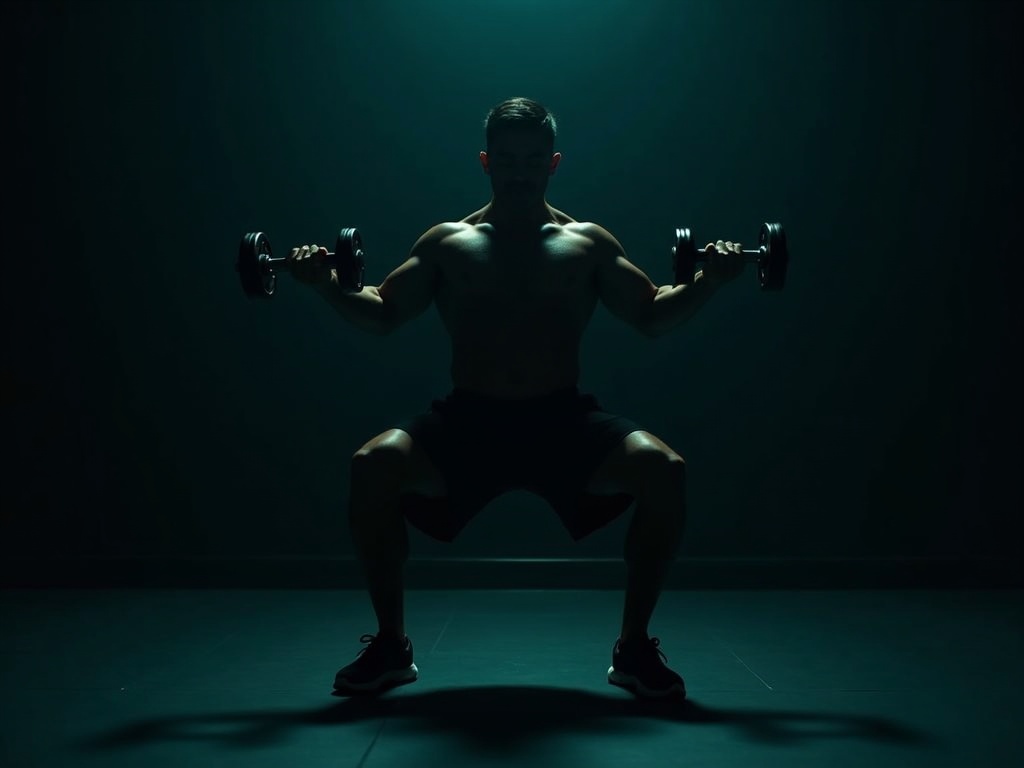
You don’t walk, run, or climb stairs on two legs at once. You do it one leg at a time. So why does almost all leg training happen on two legs? Single-leg movements – split squats, Bulgarian split squats, step-ups, lunges – fix that gap, and they’re some of the most humbling work in the gym.
They get overlooked because they’re hard and they expose you. Balance wobbles. One side is weaker than the other and suddenly you can’t hide behind your strong leg the way you do on a barbell squat. It’s easier on the ego to just load a bar and let both legs share the work. Easier, and worse for you.
Single-leg training builds real balance, bulletproofs your knees and hips, and irons out the left-right imbalances that quietly set you up for injury. It’s the difference between confidently catching yourself on an icy sidewalk and going down hard. Start here: rear-foot-elevated split squat. Put your back foot on a bench, front foot a stride ahead, and lower straight down until your back knee kisses the floor. Bodyweight first. Add dumbbells only once you’re steady.
4. Anti-rotation core

Forget the endless crunches. Your core’s biggest real job isn’t curling you forward – it’s stopping your torso from twisting, folding, or collapsing when force hits it from the side. That’s anti-rotation, and the king of it is the Pallof press.
Set a cable or band at chest height, stand side-on to it, and press your hands straight out from your chest. The cable tries to yank you into a twist. Your job is to refuse. Don’t rotate. That fight – staying perfectly square while something pulls you off-line – is exactly what a strong, functional core does all day.
It’s overlooked because it doesn’t burn like a hundred sit-ups and it doesn’t chase the six-pack look. But this is the core strength that protects your spine when you carry a bag on one shoulder or get bumped in a crowd. Start here: light resistance, press out for a two-count, hold for two, bring it back slow. Feel your whole midsection lock down. Three sets of eight per side and you’ll understand what real core control feels like.
5. Horizontal pulling

Here’s the imbalance almost everyone builds: tons of pushing, barely any pulling. Bench, dips, overhead press – all pushing the weight away. Meanwhile the pulling muscles, the ones that hold you upright, get a couple of half-hearted sets if they’re lucky. Rows fix that.
A horizontal row – single-arm dumbbell row, chest-supported row, seated cable row – means pulling weight toward you while squeezing your shoulder blades. It’s overlooked because you can’t see your back in the mirror, so it never gets the attention the chest and arms do. Out of sight, out of program.
But a strong back is what stands you up straight after eight hours hunched at a desk. It balances out all that pressing so your shoulders stay healthy instead of rounding forward and aching. Good posture isn’t willpower – it’s back strength. Start here: single-arm dumbbell row. Brace a hand and knee on a bench, let the dumbbell hang, then drive your elbow up and back until the weight reaches your ribs. Lead with the elbow, squeeze at the top, lower slow. Pull as much as you push and everything changes.
Put them to work
You don’t need to overhaul everything tomorrow. Pick two of these and bolt them onto your next couple of sessions. Carries and rows at the end of an upper day. Hinges and split squats on leg day. A few sets of Pallof presses whenever. Keep them in your program long enough to get strong at them – which means writing down what you did last time so you can beat it, whether that’s in a beat-up notebook or by logging your sets in Kalaku so next week’s numbers are waiting for you.
The lifters who move well at 50, 60, 70 aren’t the ones who benched the most in their twenties. They’re the ones who trained the movements life actually demands. Carry heavy. Hinge clean. Stand on one leg. Brace hard. Pull as much as you push. Do that, and you won’t just look stronger – you’ll be the person who grabs the heavy end without a second thought. Go earn it.