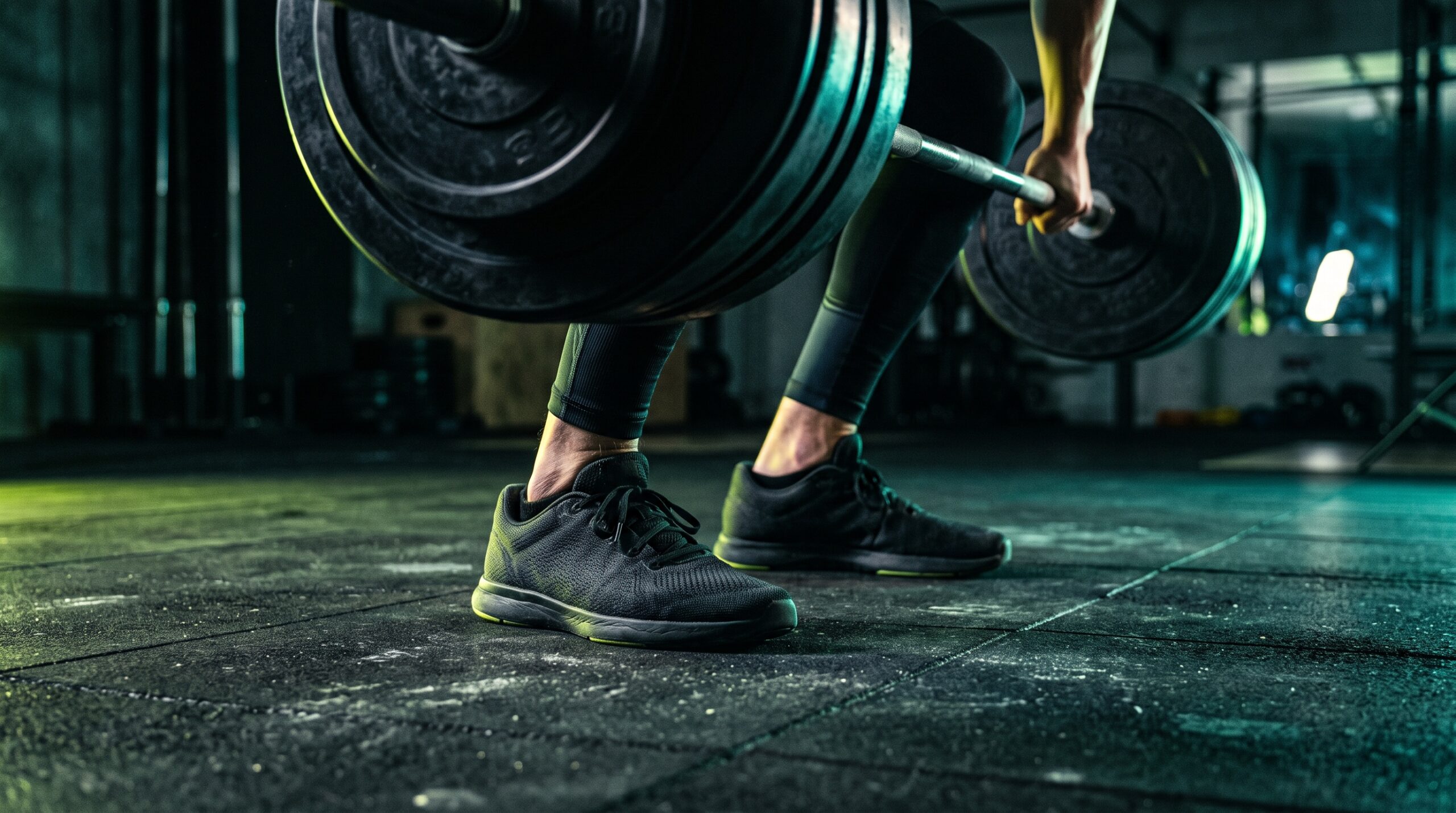
Look down. If you’re squatting and deadlifting in the same bouncy, cushioned running shoes you jog in, you’re leaving strength on the floor — literally. Running shoes are engineered to do one thing: absorb impact so your joints survive thousands of foot strikes on pavement. That squishy foam is a feature when you run. Under a heavy barbell, it’s a leak. Every bit of force you drive into the ground gets partly swallowed by the sole instead of moving the weight, and your foot rocks around on an unstable platform while you’re trying to hold a hundred-plus kilos steady.
What the cushioning actually does to your lift
Think of your lift like a building. The barbell is the top floor; your feet are the foundation. Now imagine building on a mattress. That’s what a thick, compressible sole is under load — a foundation that shifts, sinks, and springs back unpredictably. When you drive up out of a squat, some of your force compresses the foam instead of the bar, and the energy you meant to put into the weight bleeds sideways into your shoe. You feel it as a lift that’s harder than it should be and a little wobbly at the bottom.
Worse, the foam doesn’t compress evenly. As the bar gets heavy your weight drifts, the sole squashes more on one side, and suddenly your knee is tracking somewhere it shouldn’t, or your balance shifts onto your toes. That’s not just lost power — it’s how form breaks down and how tweaks happen. The shoe built to protect you when you run is quietly making you less stable when you lift.
Flat and hard: the base you actually want
The fix costs almost nothing. For deadlifts and most pressing, you want a flat, hard, thin sole that doesn’t compress — something that keeps your whole foot planted and lets you grip the floor and drive through it. On a deadlift specifically, a thin sole also means you’re pulling the bar a slightly shorter distance, because you’re standing closer to the ground. Free range of motion, free reps.
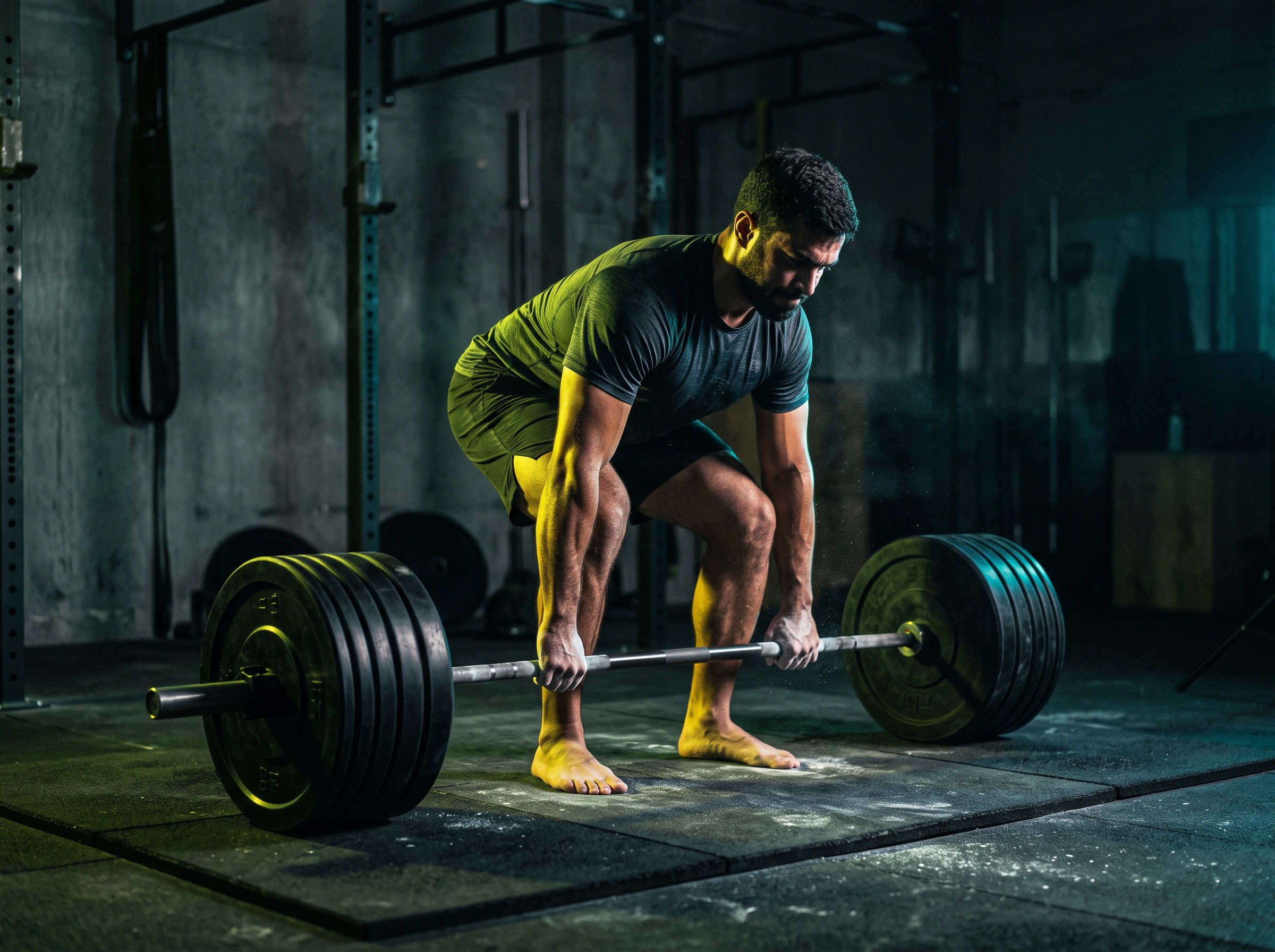
You don’t need to buy anything fancy to test this. Try a pair of cheap flat canvas shoes, a basic hard-soled trainer, or even just your socks on a deadlift (where the gym allows it), and feel the difference on your next set. Most lifters notice it immediately — the bottom of the squat feels more solid, the deadlift feels more connected to the floor, and the whole lift feels like it’s coming from a base that isn’t fighting you. That instant “oh” is the cushioning you didn’t know was costing you.
Where a raised heel earns its place
There’s one twist. For squats — especially deep, upright squats, and if you’ve got stiff ankles — a slightly raised, hard heel is genuinely useful. A dedicated weightlifting shoe has a solid elevated heel that lets you sit deeper with a more upright torso, keeping your chest up and your knees tracking well without your ankles having to bend as far. It’s not cushioning; it’s a firm wedge that changes your leverage. That’s why you’ll see serious squatters in them.
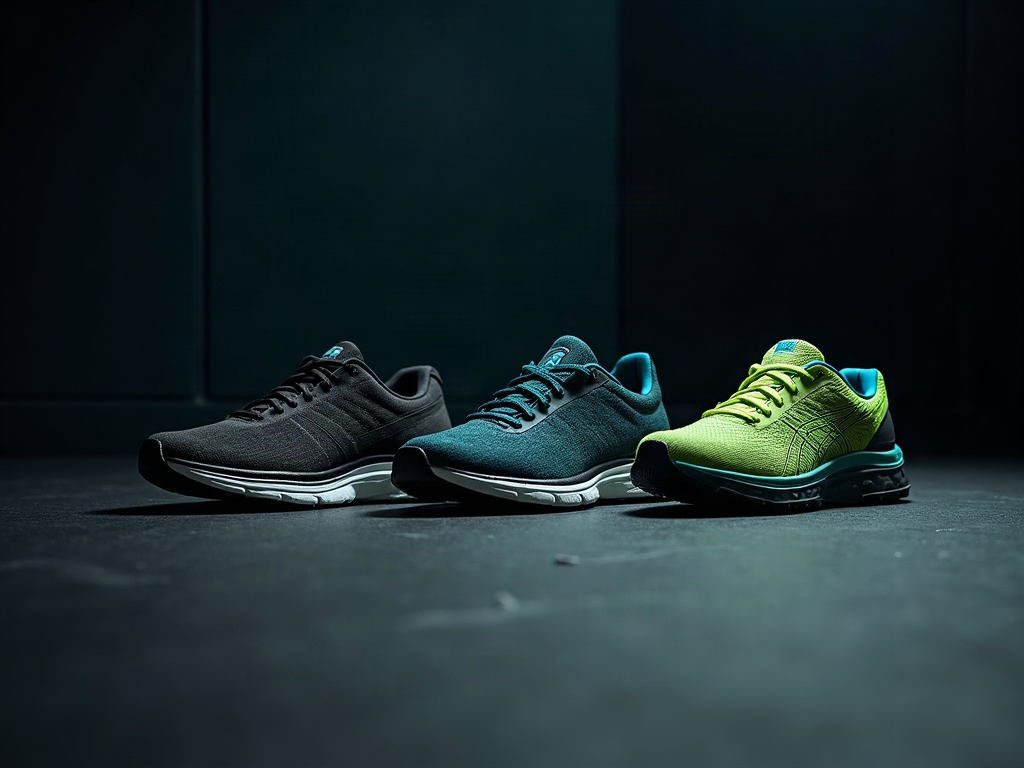
So the honest answer isn’t “one perfect shoe.” It’s the right base for the job: a flat, hard sole for deadlifts and pulling, a raised firm heel for deep squats, and cushioned trainers for the treadmill where they belong. If you only ever buy one thing, a flat hard-soled shoe covers the most ground for the least money. A raised-heel lifting shoe is the upgrade for when you get serious about squatting.
Fix your feet, unlock everything above them
This is one of those rare gym tweaks that costs next to nothing and pays off on your very next session. You don’t have to change your program, add volume, or train harder — you just stop sabotaging your foundation. A stable base means more balance, more force into the bar, cleaner form, and often a little more depth and a few more solid reps, all from swapping what’s on your feet.
So the next time you walk up to the rack or the platform, check your shoes before you check your ego. Save the marshmallow soles for your run. Under the bar, plant something flat and hard, grip the floor, and feel how much stronger you are when your feet finally stop stealing your reps. Train with a base you can trust — not the scroll, and not the squish.