Walk into any weight room and count the earbuds. Almost everyone training hard has something playing. It’s not just habit — you feel like you lift better with the right track in your ears. Heavier. More locked in.
So is that real, or is it in your head? Turns out it’s both. Music while lifting genuinely changes how you perform — and the science behind why is more interesting than “it pumps you up.” Here’s what your playlist is actually doing, and how to make it work for you instead of against you.
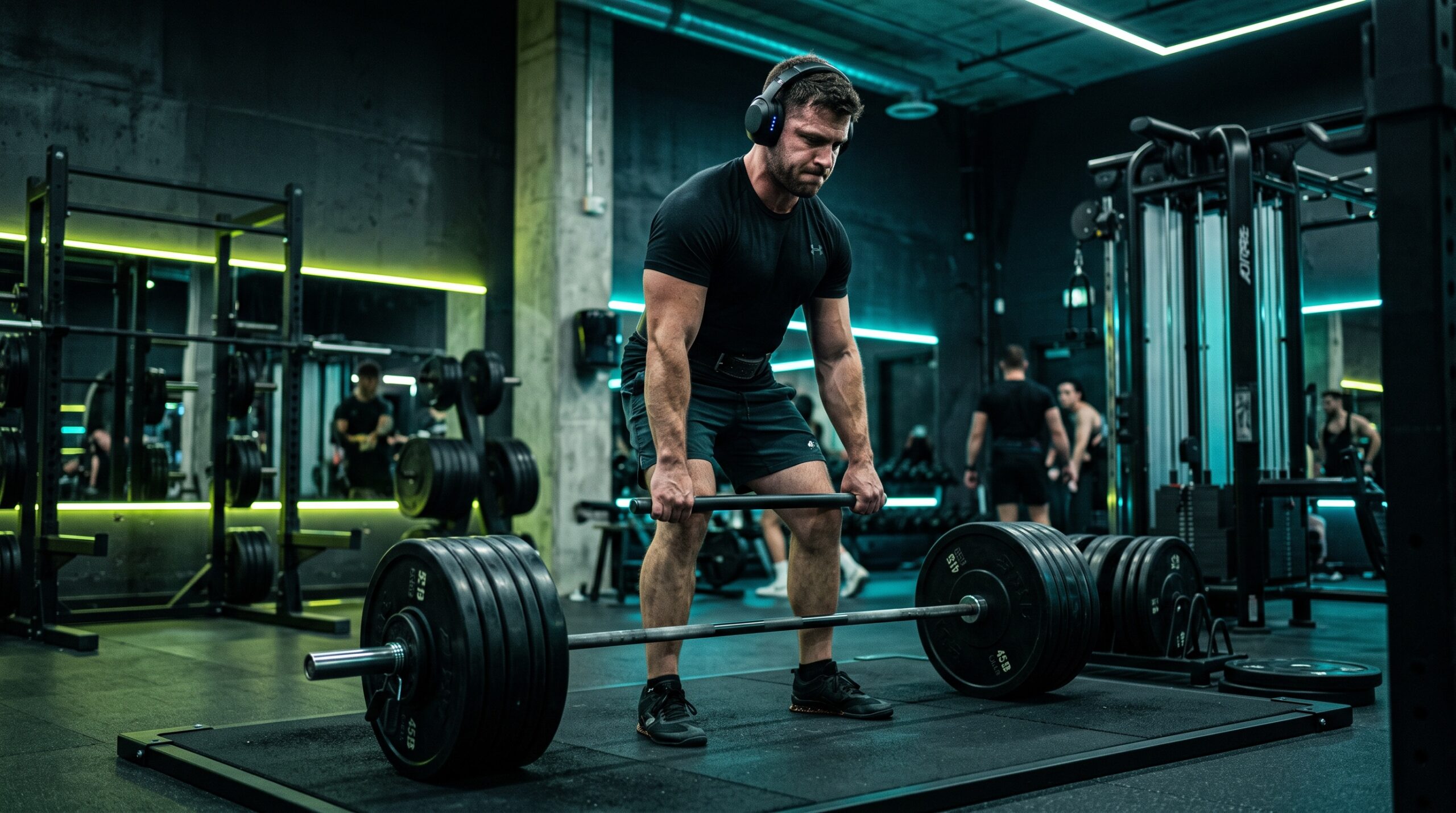
Music really does move the needle
This isn’t bro-science. Researchers have studied music and exercise for decades, and the pattern is consistent: the right music improves performance, especially on effort-based work.
The headline effect is on your sense of effort. Music lowers your rate of perceived exertion — how hard a given set feels. Same weight, same reps, but with a driving track behind it, your brain registers less strain. That gap is real output. When a set feels easier, you grind out the last rep instead of racking early.
Music also nudges your physiology: it can raise arousal, sharpen mood, and pull your attention away from fatigue and toward the task. For endurance and higher-rep work, that can stretch how long you last. For heavy lifting, it helps you attack the bar instead of dreading it.
Tempo is the secret ingredient
Not all music does the same job. The biggest lever is tempo — beats per minute.
Fast, high-energy tracks (roughly 120 to 140 BPM and up) reliably ramp up arousal and drive. That’s your warm-up and your working-set fuel. Slower music has its place too — for cooldowns, mobility, or settling your nerves before a heavy single — but it won’t light a fire under a hard set.
There’s a ceiling, though. Past a certain point, faster doesn’t mean better; your body stops syncing to the beat and it just becomes noise. The sweet spot is music energetic enough to lift your state without drowning out your own focus. Build a playlist that matches the shape of your session: steady climb, hard peak, calm finish.
When silence actually wins
Here’s the nuance most gym playlists ignore: sometimes you want your ears open.

For a true max-effort lift — a heavy single, a PR attempt, anything where a missed cue means a missed rep or a tweak — some lifters perform better with less audio noise, not more. At that intensity you’re not looking for distraction from effort; you’re looking for total, narrow focus. You want to hear your own breathing, feel your brace, and execute a rehearsed cue.
Loud music is brilliant for volume work and psyching up. But if you notice your technique gets sloppy on your heaviest sets when you’re hyped and half-dancing, that’s a signal. Kill the volume, take the extra beat, and lift with intent. Match the audio to the job.
The catch: your music lives on a distraction machine
Now the trap. The device pumping that perfect playlist into your ears is the same device engineered to hijack your attention.
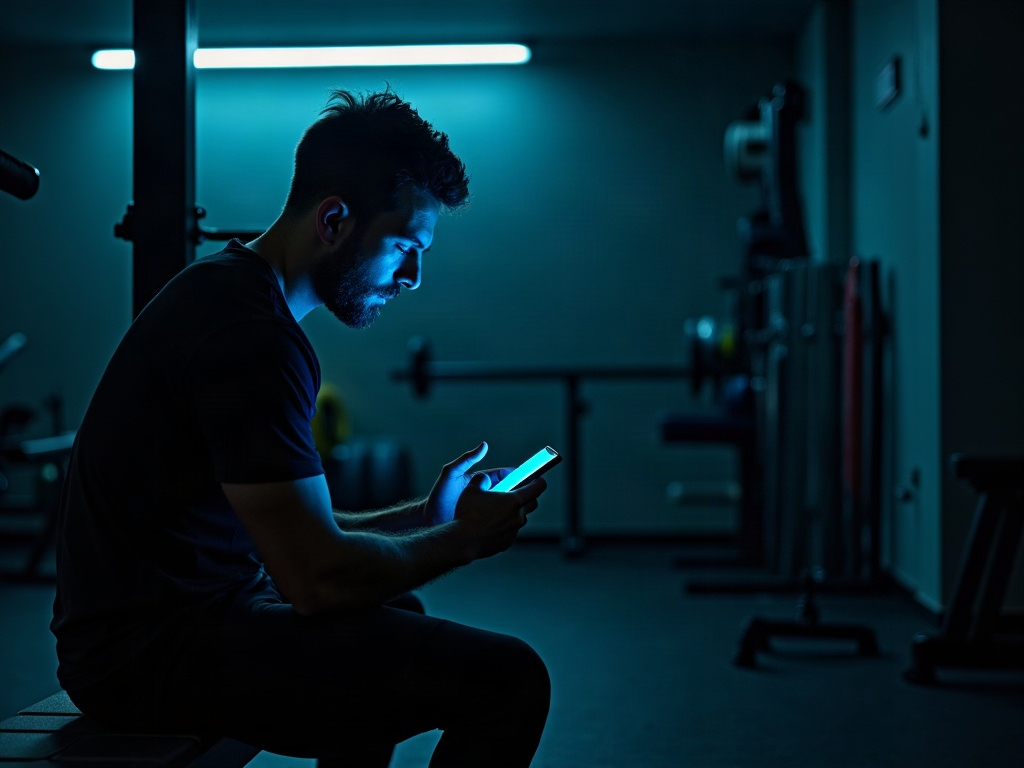
You put on your song, you’re locked in — and then a notification slides down. You tap it “just to check.” Suddenly you’re deep in a feed, your rest period has ballooned to four minutes, and the focus your music built just evaporated. The playlist gave you an edge; the phone quietly took it back and then some.
This is the paradox of training with your phone. It holds your music, your logbook, your timer — and an endless stream of stuff designed to pull you out of the set. The music helps. The scrolling between sets hurts far more.
How to get the boost without the drain
You don’t have to choose between good music and good focus. You just have to set the phone up so it serves the workout and nothing else:
- Queue the playlist before you start — a full session’s worth. If you never have to open the phone to change a song, you never open the door to the feed.
- Turn on Do Not Disturb or airplane mode. Download your music offline and cut the notifications entirely. No pings, no temptation.
- Use a real rest timer, not vibes. “Scroll until it feels like enough” is how a 45-minute session becomes 75. A fixed rest window keeps your intensity honest — Kalaku’s built-in timer is made for exactly this, so the phone counts your rest instead of stealing it.
- Keep it in your pocket between sets. If it’s not in your hand, you can’t fall in. Music keeps playing; you keep your head in the room.
Build a playlist that trains with you

Treat your playlist like part of your program. Front-load it with something steady for your warm-up. Stack your hardest-hitting tracks around your top working sets, when you need the most drive. Save the calmer stuff for the walk out.
Then protect it. Music is a legit performance tool — it lowers perceived effort, sharpens focus, and helps you push. But a tool only works if the distraction attached to it stays shut off.
So build the playlist, silence the notifications, start the timer, and pocket the phone. Let the music do its job while you do yours: one focused set after another, no scroll in between.
Sources & further reading:
- The Effects of Music on Exercise Performance – Frontiers in Psychology
- How Music Can Boost Your Workout – Healthline