You set up for a heavy deadlift, the back feels strong, the legs are loaded – and then the bar starts peeling out of your fingers. Set over. Not because your back quit, but because your hands did. If that sounds familiar, your grip is the governor on your biggest lifts, and you’re almost certainly leaving strength on the floor.
The good news: grip is trainable, fast, and most of the fixes cost you nothing. Here’s why it fails first and exactly how to stop it from capping your pulls.

Why your grip taps out before your back
Your lats, traps, and spinal erectors are big, powerful muscles built to move serious load. Your grip runs on comparatively small forearm muscles and the tendons in your hands. On a hard pull, those little structures fatigue long before the big movers do – so the bar slips while your back still has reps left in the tank.
It gets worse the longer the set runs. High-rep rows and long deadlift sets give your grip more time to give out. And if you’ve spent years auto-reaching for straps on every pull, your grip never had a reason to get stronger in the first place.

Fix #1: Use a double-overhand grip as your default
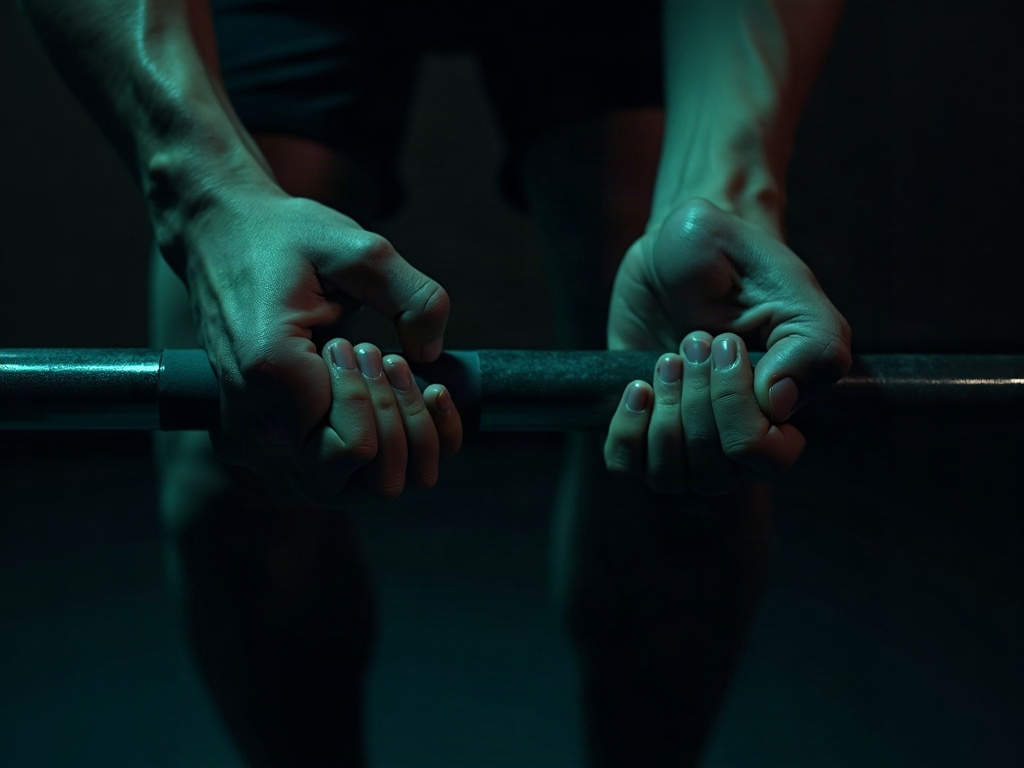
A lot of lifters jump straight to a mixed grip (one palm up, one palm down) the moment things get heavy. It’s stronger, sure – but it also means your grip never has to work. Make the double-overhand grip your default on warm-ups and your first working sets. It’s the single best builder of raw grip there is, because the bar is actively trying to roll out and your fingers have to fight it every rep.
You’ll handle a little less weight at first. That’s the point. You’re training the weak link instead of hiding it.
Fix #2: Learn the hook grip – or earn your straps
When the load genuinely exceeds what a double-overhand can hold, you have two honest options. The hook grip – thumb trapped under your first two fingers – is brutally secure and keeps both palms facing you, which is kinder to your biceps than a mixed grip. It pinches for the first few weeks, then your thumbs toughen up.
Straps are the other option, and they’re not cheating – they’re a tool. The rule is simple: use them so the working muscle, not your grip, is the thing that fails on your heaviest back-focused sets. Build grip on your lighter sets double-overhand; strap up when the goal is purely overloading the back. Just don’t let straps become the thing you reach for on every single set.
Fix #3: Add loaded carries
If you do one thing for your grip, make it carries. Grab a pair of heavy dumbbells or a trap bar, stand tall, and walk. Farmer’s carries hammer your grip under real load while also building traps, core, and work capacity. Two or three trips of 30-40 meters at the end of a session is plenty.
The beauty of carries is that they train grip endurance – the exact quality that fails on long sets – without adding another fussy exercise to learn.
Fix #4: Finish with static holds
Dead hangs from a pull-up bar and timed barbell holds at the top of a deadlift are the most direct grip work you can do. Load a bar to something challenging, lift it to lockout, and just hold for 15-30 seconds. Two or three of those at the end of your pulling day build a vice-like grip in a few weeks.

Fix #5: Stop burning your grip on your phone
Here’s the quiet one. Grip is a limited resource during a session, and so is your focus. If you’re thumbing through your phone between every set, you’re both cooling off and splitting your attention right when you should be locking in for a heavy pull. The lifters with the strongest pulls aren’t scrolling – they’re resting with intent, chalking up, and attacking the next set.

Put it together
You don’t need a grip-specialization program. You need to stop hiding the weak link: pull double-overhand until you can’t, learn the hook grip or use straps deliberately, add carries and a few static holds, and keep your head in the session instead of your feed. Do that for a month and the bar stops being the thing that quits first.
Train the grip, keep the focus, and let your back be the limiter it’s supposed to be. Put the phone down, chalk up, and go pull.