You wake up with a scratchy throat and a stuffy nose, and there it is – the standoff. Your gym bag is packed by the door. Your streak is alive. And a little voice is asking whether one skipped session is going to undo weeks of work. So do you train, or do you stay home?
Good news: you don’t have to guess, and you don’t have to be a hero. Sports-medicine folks have used a dead-simple test for decades to answer this exact question. It’s called the neck rule, and you can run it in about five seconds before you ever lace up.

The neck rule, in one line
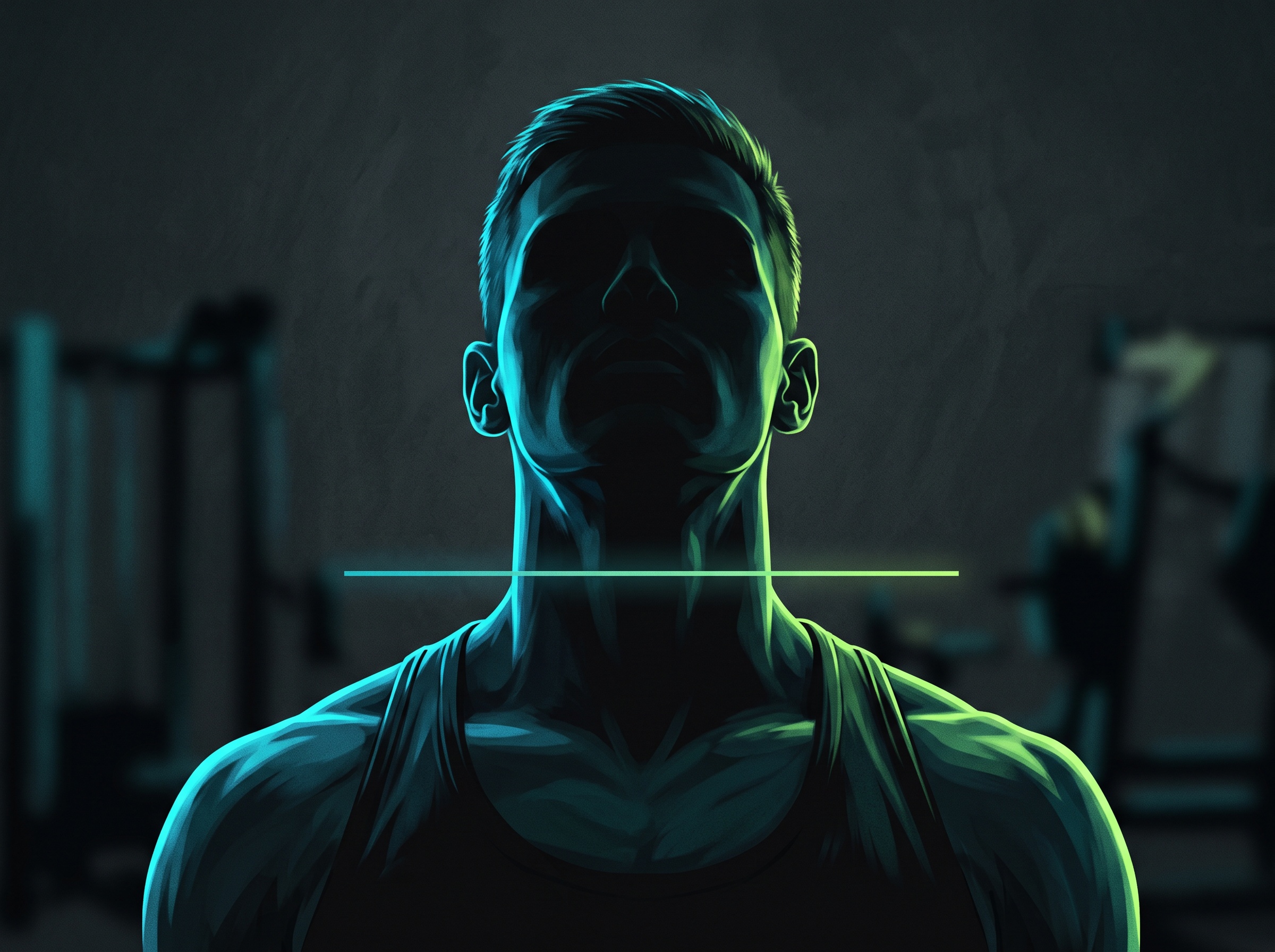
Here’s the whole thing: if your symptoms are all above the neck, you’re usually fine to train – lightly. If any symptoms are below the neck, shut it down and rest.
Above the neck means the stuff that stays in your head: a runny or stuffy nose, sneezing, a mild sore throat, some sinus pressure. This is your garden-variety head cold. Research on this is reassuring – moderate exercise with above-the-neck symptoms generally doesn’t make a cold worse or drag it out, and it won’t hurt your immune system.
Below the neck is the warning zone: chest congestion, a hacking or productive cough, body aches, chills, fever, swollen glands, or a rolling stomach. When your symptoms have moved south, your body is fighting something systemic – and a hard training session pours fuel on the fire.
Why below-the-neck is a hard no
This isn’t gym-bro caution. There’s real physiology behind it. When you’ve got a fever or body-wide illness, your immune system is already running your engine hot. Add a heavy training load on top and you ask a taxed body to recover from two big stresses at once – it does neither well.
The genuinely serious reason is your heart. Certain viral infections can inflame the heart muscle, a condition called myocarditis, and strenuous exercise during that window is one of the situations doctors worry about most. It’s rare, but the downside is severe enough that no personal record is worth the gamble. If you have a fever, chest symptoms, or you feel wiped out and achy all over, the barbell waits. Full stop.
Green light: how to train with a head cold
So your symptoms passed the neck check – just a stuffy nose and a scratchy throat, and you feel basically okay. You can train, but treat it as a maintenance day, not a milestone day. The move is to cut the intensity and the volume, then reassess as you go.
- Drop the load. Take 20-40% off your working weights, or just chase clean, easy reps. This is not the day to grind or to test a max.
- Trim the volume. Do fewer sets. Hit the movement, get some quality work in, and leave.
- Use the 10-minute test. Warm up and give it ten easy minutes. If you feel better and the body’s cooperating, carry on at that dialed-back pace. If you feel worse, you have your answer – go home. There’s no shame in a bailout.
- Skip failure and heavy singles. Maximal effort is a big immune stressor. Save it for when you’re 100%.
The point of training sick is not progress – it’s protecting your rhythm. A short, light session keeps your habit intact without setting your recovery back, which is exactly the balance we talk about in building a training habit that survives busy weeks. And be a decent human: wipe down every bit of equipment you touch, and skip the gym entirely if you might be contagious.
Red light: what to do when you rest
If it’s below the neck, resting is the smart training decision – not a failure of willpower. The work you’ve banked doesn’t evaporate in a few days. Muscle isn’t nearly as fragile as your ego makes it feel; we dug into exactly how long it really takes to lose progress in detraining and muscle memory, and the short version is you have far more slack than you think.

So put the same discipline you’d bring to a session into your recovery. Sleep as much as your body demands – it’s the single biggest lever your immune system has, and it happens to be where muscle rebuilds too, which is why we keep hammering on sleep as the recovery that actually builds muscle. Hydrate. Eat enough protein. Give the fever time to break. Treat these days as an investment, not a loss.
Easing back in without wrecking yourself
Once you’re on the mend – the fever’s been gone for a full day, energy is returning, appetite is back – resist the urge to “make up” for lost time. That’s how people get hurt or relapse. Come back at maybe 60-70% for your first session or two, keep the reps clean, and let your work capacity rebuild over a few days.

A rough on-ramp: first session back, light full-body work and easy movement. Second session, add a little load. By the third, if you feel genuinely normal, resume your regular programming. If you crash halfway through a warm-up, you came back too soon – back off another day. Your strength will still be there. It always is.
The bottom line
Run the neck check before every questionable session. Above the neck: train light, cut the load, use the 10-minute test, and go home if it turns. Below the neck – especially any fever, chest, or full-body symptoms: rest without guilt and come back easy. One missed week won’t dent your progress. Training through a real illness absolutely can. The strongest move a lifter makes isn’t showing up no matter what – it’s knowing the difference between a day to push and a day to protect the machine. Get healthy, then get after it.
Sources & further reading:
- The ‘Neck Check’: Exercising When You’re Sick (sports-medicine guidance)
- American College of Sports Medicine – Exercise and the Common Cold