You finish your last set, rack the weights, and the mental countdown begins. You’ve got thirty minutes, maybe an hour, to slam a protein shake before your hard-won gains evaporate into thin air. Miss the window and you might as well have skipped the session. At least, that’s the story every gym has been telling itself for decades.
It’s a great story. It sells a lot of ready-to-drink shakes. It’s also almost entirely wrong. When researchers actually went looking for this magical post-workout window, what they found was far calmer, far more forgiving, and honestly a lot more useful. Let’s put the stopwatch down and look at what really happens after you train.
The short answer
No, you do not need to eat protein immediately after lifting. The idea that muscle growth hinges on a narrow 30-to-60-minute window after your workout is not supported by the evidence. What matters overwhelmingly more is how much protein you eat across the entire day. Nail your daily total and the exact minute you drink your shake becomes a rounding error.
That doesn’t mean timing is completely meaningless, and there’s one real scenario where it starts to matter, which we’ll get to. But for the vast majority of lifters, the anxiety about racing to the blender is wasted energy.

Where the “window” myth came from
The theory wasn’t pulled out of nowhere. Resistance training does ramp up muscle protein synthesis, the process your body uses to repair and build muscle tissue. Feeding your body protein around a workout does support that process. So far, so reasonable.
The leap came in assuming that spike was brief and time-critical, a slamming door you had to beat. Early studies that seemed to show an urgent benefit were often done in a fasted state, where the body genuinely was starved of nutrients. Marketing did the rest, turning a modest physiological signal into a life-or-death countdown printed on every tub of powder. The message stuck because it was simple, urgent, and sold product.
What the research actually shows
Here’s where it falls apart. In 2013, researchers Alan Aragon and Brad Schoenfeld published a detailed review with the pointed title “Nutrient timing revisited: is there a post-exercise anabolic window?” Their conclusion: the window, if it exists at all, is much wider than an hour, and the effect of timing is easily swamped by simply eating enough protein day to day.
A companion meta-analysis pooling the available studies found the same thing. When you statistically account for total daily protein intake, the supposed benefit of precise post-workout timing essentially vanishes. The studies that looked like they showed a timing effect were mostly showing a protein-amount effect in disguise, the timed groups were often just eating more protein overall.
The reason is biology. The elevated muscle-building response to a hard session doesn’t last thirty minutes. It stays raised for at least 24 hours, and for beginners often longer. Your muscles are primed to use protein all day, not for one frantic sprint to the locker room.
The real window is bigger than you think
Here’s the part the shake ads leave out: the meal you ate before training is still in play. Protein takes hours to fully digest and circulate, so a solid pre-workout meal means amino acids are already elevated in your bloodstream during and after your session. You showed up fed. The window was already open before you touched a barbell.
That’s why Aragon and Schoenfeld suggested thinking in terms of a much larger span, roughly a few hours on either side of your workout, rather than a narrow post-session dash. If you ate a protein-rich meal two hours before lifting, you could reasonably wait a couple of hours afterward to eat again and lose nothing. The practical takeaway is freeing: stop timing to the minute and start thinking about your day as a whole. What matters is hitting your total daily protein target, ideally spread across three or four meals so your body has a steady supply to work with.

When timing actually does matter
Now the honest caveat, because being even-handed matters more than being dramatic. There is one situation where post-workout protein genuinely earns its urgency: training fasted.
If you lift first thing in the morning on an empty stomach, or your last real meal was six-plus hours ago, then there aren’t many amino acids floating around to support recovery. In that case, getting protein reasonably soon after your session, within an hour or two, makes sense, because you’re topping up a tank that’s actually running low. This isn’t about a magic window slamming shut; it’s simply that you’ve gone a long stretch without fuel and it’s time to eat.
The same logic applies if you train twice in one day or you’re an athlete with back-to-back sessions. When recovery time is short, getting nutrients in sooner helps you be ready for the next bout. For the average person lifting three or four times a week after a normal meal, none of this applies.
What to actually do
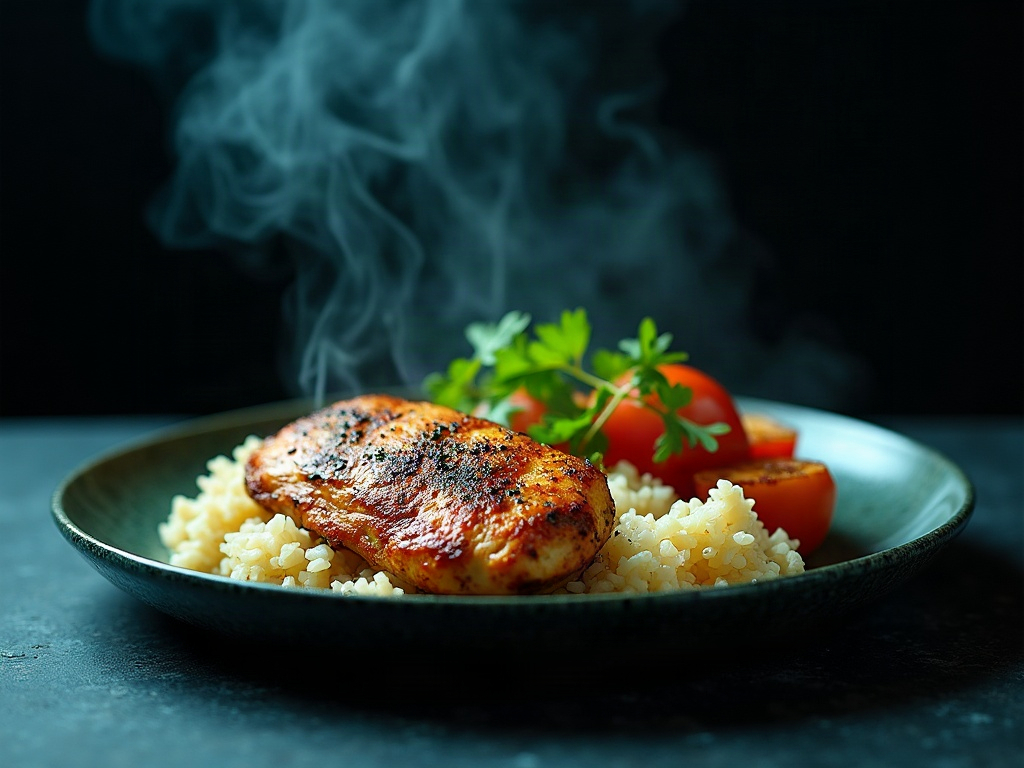
Forget the countdown and build a simple routine you can repeat without stress. Eat a meal containing 25 to 40 grams of protein in the few hours before you train, and another protein-rich meal in the few hours after. That easily covers the entire relevant window without a stopwatch anywhere in sight.
If you happen to enjoy a shake right after your set, keep having it, it’s a convenient, easy-to-digest way to hit your numbers, just don’t treat it as an emergency. If you’d rather wait and eat real food an hour later, that’s completely fine too. The shake is a tool for convenience, not a fuse you have to beat.
And remember where post-workout nutrition sits in the pecking order. It ranks well below the things that truly build muscle: showing up consistently, applying progressive overload so the work gets harder over time, and giving your body the sleep it needs to recover. Chasing a 30-minute window while neglecting those is straining at a gnat while swallowing a camel. If you want a pre-session edge that’s actually backed by evidence, your energy is better spent on smart caffeine timing than on sprinting to the blender.
The bottom line
The anabolic window is real, but it’s a barn door, not a keyhole. Your muscles stay ready to build for a full day after a hard session, and the protein you ate beforehand is still doing its job. Total daily protein is the lever that moves the needle; the exact minute you eat it barely registers.
So relax. Eat enough protein across the day, have a solid meal on both sides of your workout, and save the urgency for the one time it counts, training fasted. Then put the stopwatch away, put the phone down between sets, and spend your focus where it actually pays off: on the work itself.
Sources & further reading:
- Aragon & Schoenfeld (2013): Nutrient timing revisited — is there a post-exercise anabolic window?
- Schoenfeld, Aragon & Krieger (2013): The effect of protein timing on muscle strength and hypertrophy — a meta-analysis