If you only ever learn one movement in the gym, make it this one. The hip hinge is the pattern hiding inside the deadlift, the Romanian deadlift, the kettlebell swing, the clean, the good morning – basically every lift where you pick something heavy up off the floor or drive your hips forward. It’s also the pattern almost everyone fakes. They bend over with a rounded back, yank the weight up with their spine, and call it a deadlift. Then they wonder why their lower back is lit up the next morning.
Get the hinge right and a huge chunk of the weight room suddenly makes sense. Get it wrong and you’re one bad rep away from a week on the couch. Here’s how to actually do it.

What a hip hinge actually is
A hip hinge is bending at the hips while keeping your spine flat and your knees only slightly bent. The movement happens almost entirely at the hip joint – your hips travel backward, your torso tips forward to counterbalance, and your back stays rigid like a plank the whole time. Nothing moves in your spine. It just leans.
The muscles doing the work are your posterior chain: glutes and hamstrings mostly, with your whole back bracing to keep the spine locked. That’s exactly why the hinge is so valuable. The glutes and hamstrings are the biggest, most powerful muscles you own, and the hinge is the single best way to load them.
Hinge vs. squat: why people get them confused
This is the mix-up that ruins most people’s deadlifts. A squat is a mostly up-and-down movement – you sink down between your hips with a lot of knee bend, torso staying fairly upright. A hinge is a back-and-forward movement – your hips shoot back, your knees barely bend, and your torso folds toward the floor.

If you try to squat your deadlift, your hips drop too low, your knees shove forward into the bar, and the weight ends up too far from your body. If you hinge when you should squat, you’ll fold over a front squat and dump it. Learning to feel the difference – hips back versus hips down – is one of those quiet skills that fixes half a dozen lifts at once. It’s the same reason the big compound lifts reward this kind of attention, something we got into in the overlooked movements that build real-world strength.
How to hip hinge, step by step
Start with no weight. Stand tall, feet about hip-width, a soft bend in the knees. Now:
Push your hips straight back, like you’re closing a car door with your butt. As the hips travel back, let your torso tip forward to stay balanced. Keep your chest proud and your spine long – imagine a straight line running from the crown of your head to your tailbone, and refuse to let it bend. Let your arms hang straight down. Go back until you feel a strong stretch in your hamstrings, usually when your torso is somewhere around parallel to the floor. Then drive your hips forward to stand back up, squeezing your glutes hard at the top. Don’t lean back or jut your hips past lockout – just stand tall.
That’s the whole thing. Hips back to fold, hips forward to finish. The knees unlock a little but they don’t take over. If you’re adding a barbell, the exact same rules apply – and if you’re newer to the bar, it’s worth pairing this with the basics in starting out with the barbell.
The mistakes that wreck your hinge (and your back)
The big one is rounding your lower back. The second your spine bends under load, you’ve traded strong, safe muscle tension for a disc taking the hit. If you can’t keep a flat back, you’re going too deep or the weight’s too heavy – shorten the range or drop the load.
The second mistake is squatting it: dropping your hips too low and pushing your knees forward instead of sending your hips back. The third is not bracing. Before every rep, take a breath into your belly and tighten your midsection like you’re about to take a punch – the same full-body tension we broke down in how to brace your core under a heavy bar. A braced torso is what keeps that flat back flat when the weight gets real. And finally, don’t look up. Cranking your neck to stare at the mirror kinks your spine at the top; keep your eyes on a spot on the floor a few feet ahead so your head stays in line with your back.
Drills that teach your body the hinge
If the pattern won’t click, two drills fix it fast. First, the wall tap: stand a foot in front of a wall, facing away, and hinge back until your butt taps the wall, then stand up. Edge a little farther from the wall each time. It forces the hips-back pattern because you have to reach backward to find the wall.
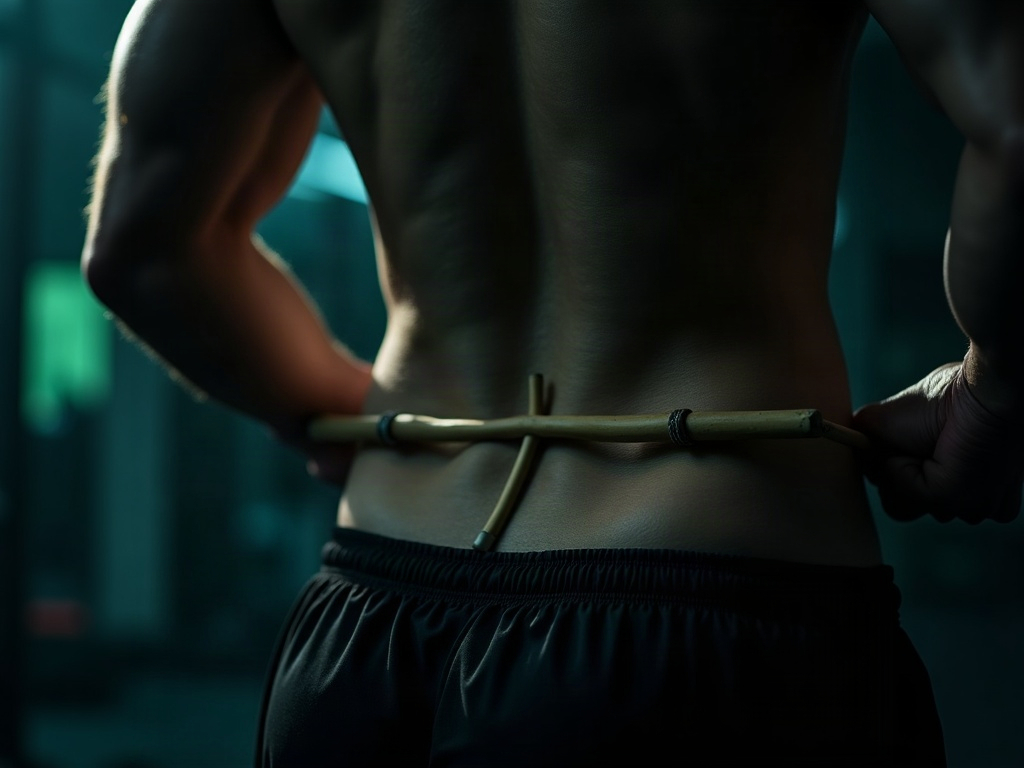
Second, the dowel drill: hold a broomstick or dowel vertically against your back so it touches the back of your head, your upper back, and your tailbone – three points of contact. Hinge while keeping all three touching. The moment your lower back rounds, the dowel lifts off your tailbone and you’ll feel it instantly. It turns an invisible fault into something you can actually sense. Grooving the pattern this way, a few quality reps at a time, teaches it far better than grinding sloppy heavy sets.
Where the hinge pays off
Once the hinge is automatic, it shows up everywhere. The deadlift is a loaded hinge off the floor. The Romanian deadlift is a hinge that lives in the top half of the range to crush your hamstrings. The kettlebell swing is a hinge done explosively – hips snap forward, bell floats up. Even picking a toddler or a loaded box off the ground is a hinge, which is exactly why this pattern matters outside the gym too.

So before you chase a bigger deadlift number, spend a week owning the hinge with light weight. Film a set from the side, or run the dowel drill, and make sure your back stays flat from start to finish. Nail that pattern – hips back, spine long, glutes squeezing you tall – and give it your full attention instead of half-watching a screen between sets. Do that, and the strongest lifts you’ve got will finally have a foundation worth loading.
Sources & further reading: